
Rostec has Started Deliveries of the Upgraded Groza Tropospheric Communication Stations
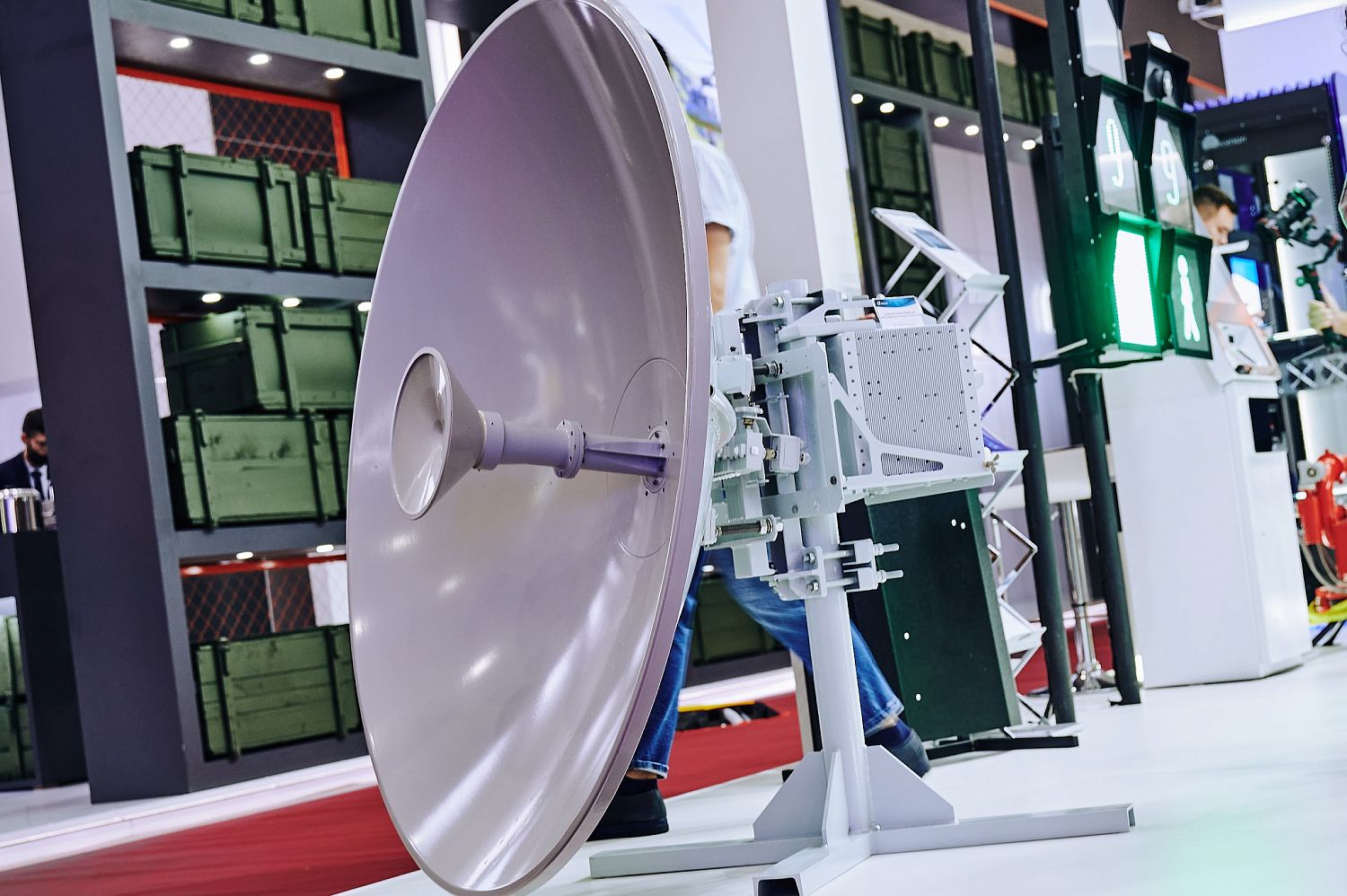
The equipment provides communication within a radius of 210 km in hard-to-reach areas and supports data rates up to 45.5 Mbps
Photo: Victor Molodtsov / Rostec State Corporation
Ruselectronics holding included in Rostec State Corporation has started deliveries of the Groza tropospheric communication stations with updated digital modem based on neural networks. The equipment provides communication within a radius of 210 km in hard-to-reach areas and supports data rates up to 45.5 Mbps.
The Groza station uses a technique based on signal reflection from the troposphere — the lowest layer of the atmosphere.
At least two transceivers are required to provide a tropospheric communication line. A 150 cm dish antenna may be placed on a building roof, mobile mast or tripod. The solution includes a digital modem that is trainable through the use of neural networks during operation and able to distinguish the desired signal from background noise. The new modem version has upgraded built-in data processing algorithms due to which the data rate has been almost doubled compared with the previous version.
The Groza tropospheric communication station is designed to provide wireless broadband communication in mountainous, hard-to-reach and sparsely populated areas, along motor roads and railways, and at remote industrial facilities. The equipment features low power consumption, easy deployment and operation offering important consumer benefits. Moreover, tropospheric communication is a cost-efficient alternative to satellite communication because there is no need in satellite bandwidth leasing.
The Groza tropospheric communication stations are manufactured by Radiosvyaz Research and Production Company (included in Ruselectronics) under the sponsorship of the Industrial Development Foundation.