
The Pantsyr System: Locked Down Sky
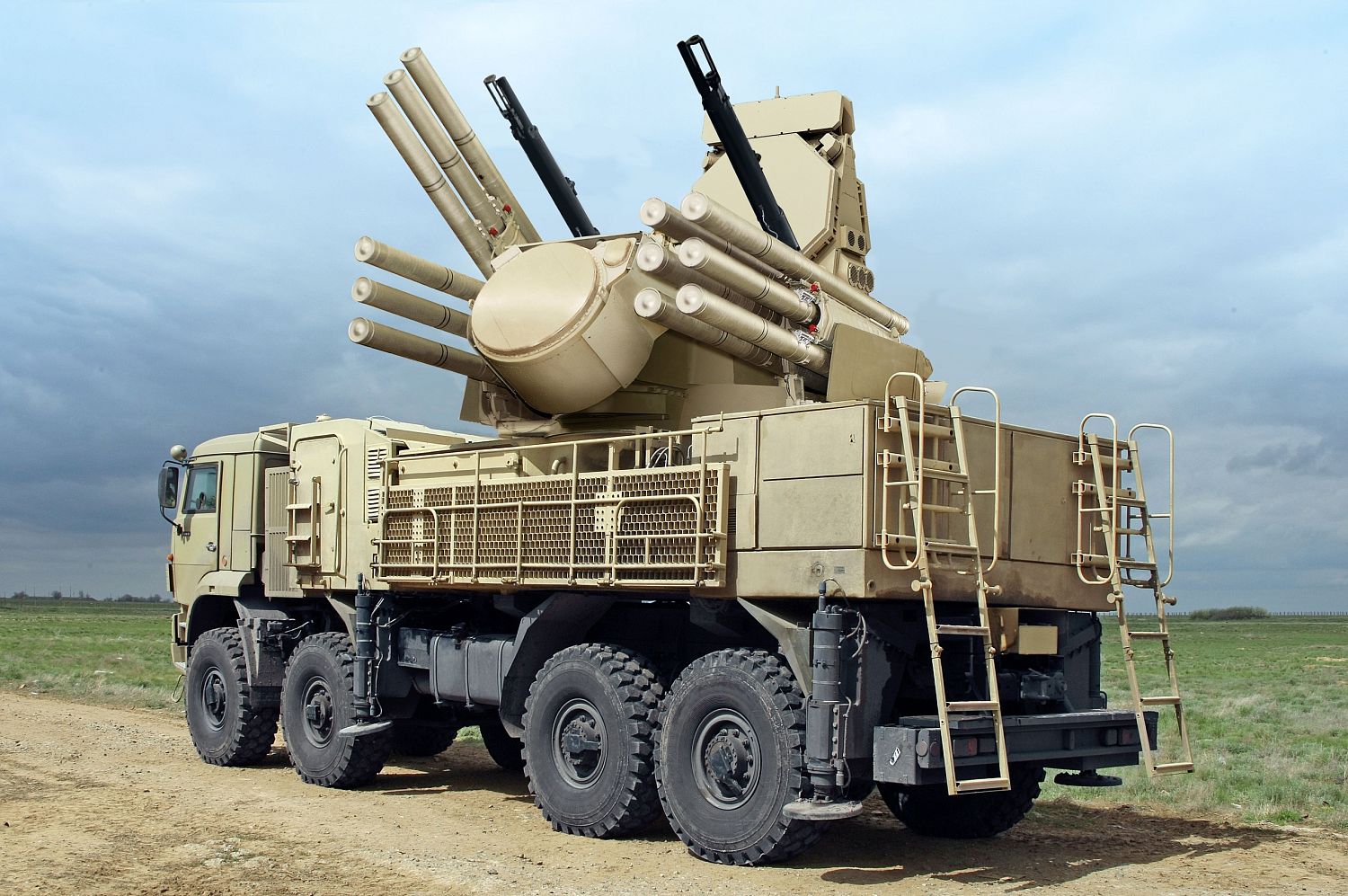
Advantages of the Russian surface-to-air missile and anti-aircraft artillery system and its current modifications
Photo: Rosoboronexport
The Pantsyr surface-to-air missile and anti-aircraft artillery system designed in 1994 has set a new air defence standard. Prevention of all types of air threats, powerful and still low-cost missiles, self-contained operation, high mobility, successful counter-UAV response, all these make the Pantsyr a golden link in the Russian multitier air defense system.
It is currently deployed in many countries, constantly being improved and still being best in class. The Pantsyr has again proved to be indispensable during the special military operation, where it regularly brings down the much-hyped Storm Shadow, ATACMS and other foreign weapons.
Best in class
The Pantsyr-S1 missile system can use a wheeled or crawler chassis and can be trailer-mounted or fixed. The system is operated by a crew of two or three operators. The weapons consist of machine guns and guided missiles with radio-command guidance and radar/infrared tracking channels.
Missiles that engage air targets at a distance from 1.5 km constitute the main killing tools. All targets approaching closer are killed with gun fire. Moreover, guns are used as a self-protection against ground-based threats.
Mobility is another important Pantsyr’s advantage. Modular architecture allows quick deployment at any point and mounting on any chassis.
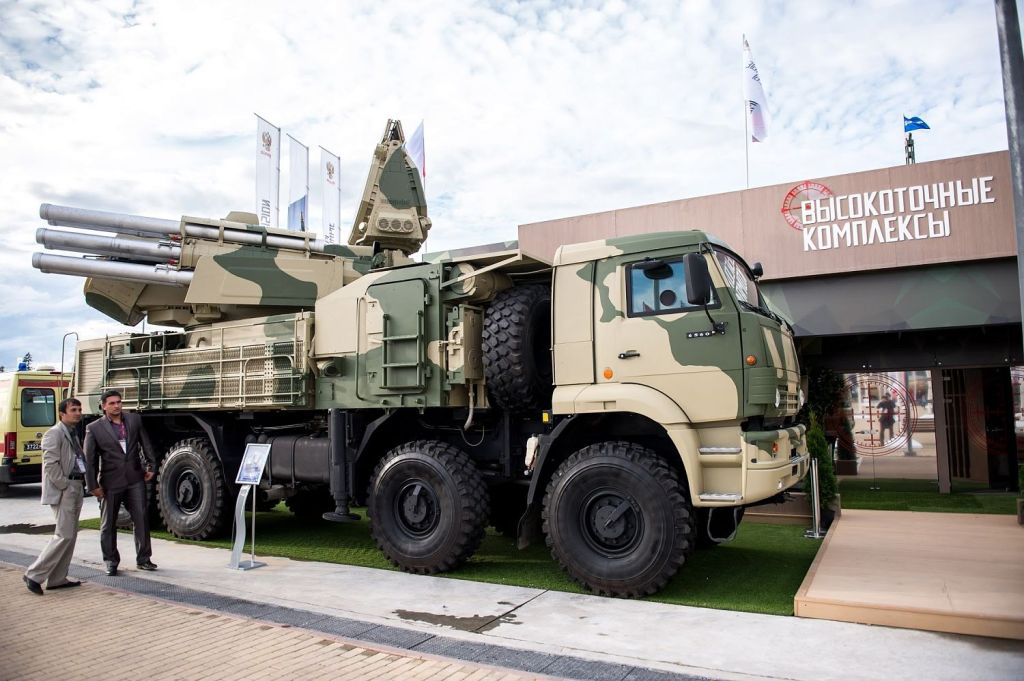
Pantsyr-S1. Photo: Rostec State Corporation
The Pantsyr-S1 is effective as a single system, but its potential is unveiled to the fullest extent as part of battalion. Each system can attack four targets simultaneously and a group of four systems can attack up to 16 targets. According to the designers, these systems may be used as a basis for complete air defence systems of a small country without significant expenditures.
Airframe is very light. The missile gains a great speed after start and moves on without a sustainer engine. The absence of contrail makes the missile stealthy. At the approach to the target, the missile explodes creating a cloud of fragments.
Similar systems were also designed in western countries, for example, the Franco-German Roland or the French Crotale. But designers of these systems failed to achieve any outstanding results.
The Pantsyr family is growing
High-Precision Systems holding continues its efforts to improve surface-to-air systems. Rostec successfully tested the newest version of one of the systems in summer 2024. This modification differs by a new crawler chassis to allow steady movement in an air defence convoy even in off-road conditions. The system has also got two types of guided surface-to-air missiles and an extended effective area.
The product family also includes the Pantsyr-ME, a naval version, designed on the basis of the Pantsyr-S in 2015. The system has got a powerful weapon station: eight guided surface-to-air missiles on the launcher and additional 32 missiles in the underdeck ammunition supply module. The turret consists of two six-barreled 30mm autocannons with a total rate of fire of 10,000 rounds per minute.
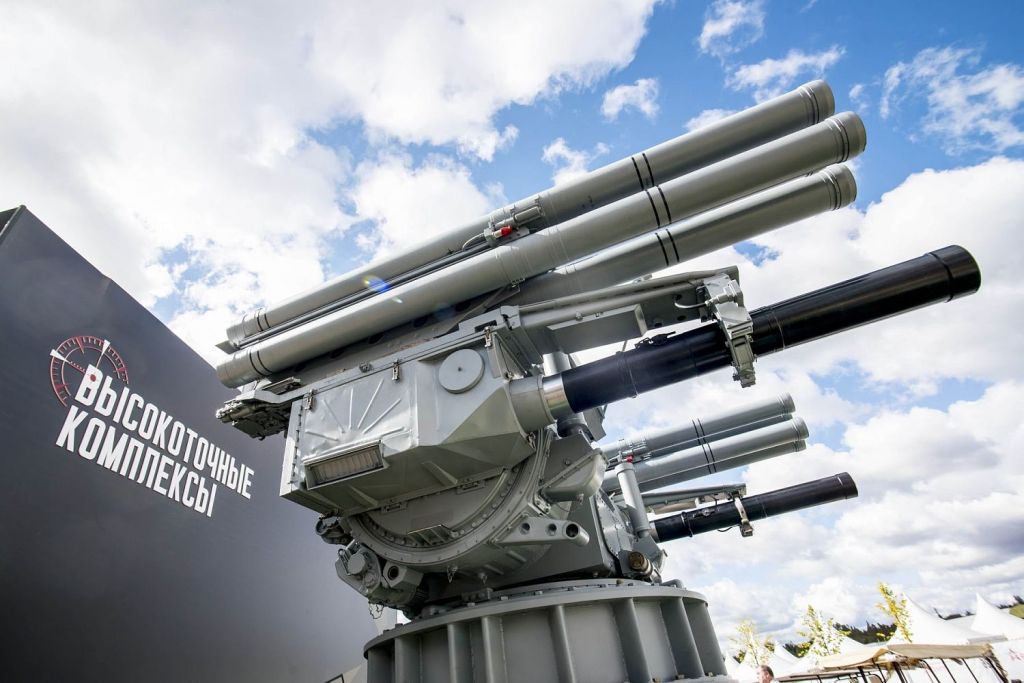
Pantsyr-ME. Photo: Rostec State Corporation
The Pantsyr-ME has a high-performance intelligent multimode radar optical control system and features fully automated operation. The system is adapted to marine conditions and can be installed on any ships with a displacement up to 300 tons and on fixed coast platforms.
Response to new challenges
According to the chief designer of the system, drones were initially one of the types of targets to be hit by the Pantsyr. For this, the Pantsyr locating system was adapted for detecting and accurate tracking of stealth targets, and the missile was also modified.
Advantage of the Russian weapons was emphasized even by NATO experts, who recognized in their reports that the Pantsyr was an ideal means of suppression throughout the UAV range.
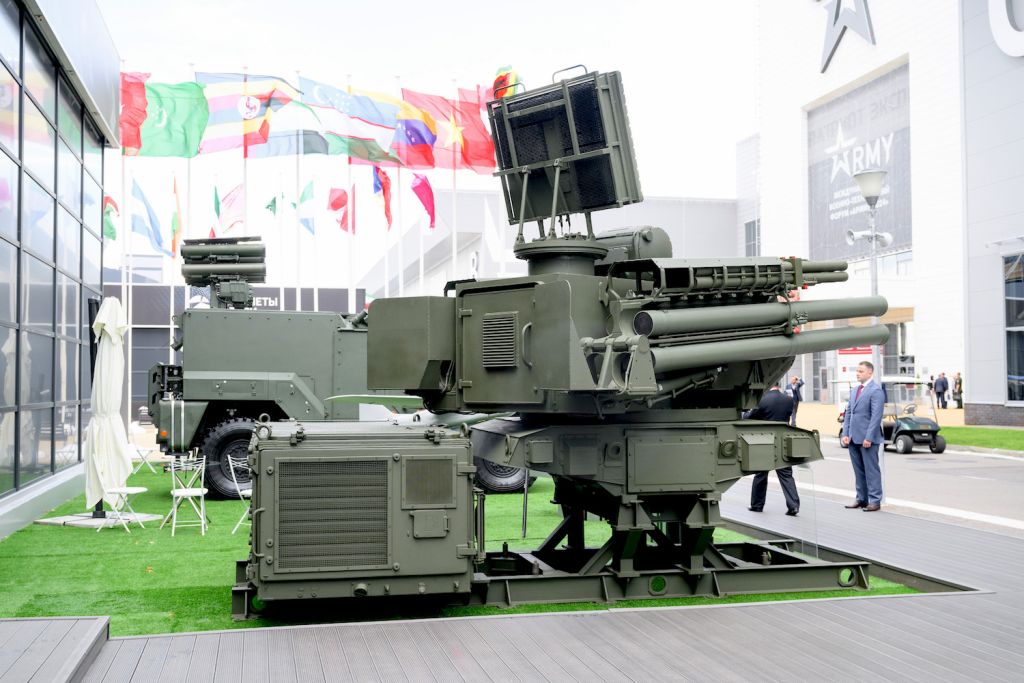
Pantsyr-SMD-E. Photo: Rostec State Corporation
The Pantsyr-SMD-E system, the latest modification, was designed to protect industrial and administrative facilities against mass UAV attacks. It differs from the previous model by having mini missiles and four times as large ammunition load: from 12 to 48 missiles, allowing more effective repulse of mass drone attacks. A pod with four short-range missiles is placed in a standard seat of the Pantsyr missile. Depending on the mission set, crews can mount various combinations of miniature and conventional missiles increasing the air weapon flexibility.