
Rostec’s Apparatus will Collect Data for Interplanetary Missions
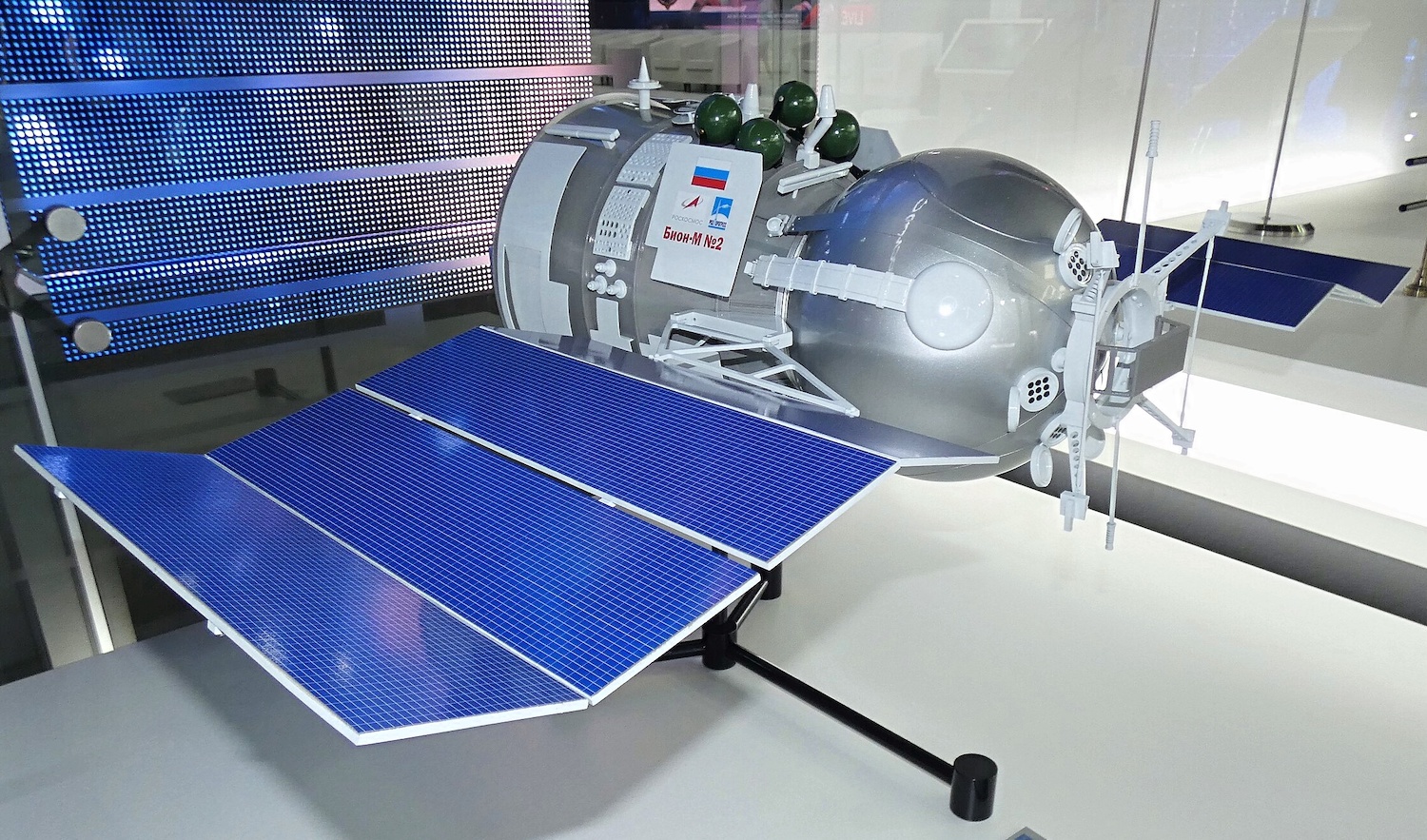
The Telenauka module will be used to get information from Bion-M No.2 satellite to be launched to an altitude of about 800 km
Photo: Kirill Borisenko / wikipedia.org
Rostec’s Rosel and Roskosmos State Corporation have completed testing of the Telenauka module for the second Bion-M spacecraft. The research apparatus will be used to collect real-time in-flight data for bioastronautics, physiology and biotechnology research. The equipment will be delivered to the Baikonur cosmodrome to prepare it for launch that will take place by the end of this year.
It is planned to launch Bion-M No.2 to an altitude of about 800 km, which is almost twice as high as the ISS orbit. The main objective is to study the problems and risks, for example radiation risks, that may occur during human access to low Earth orbit.
The Telenauka module for the spacecraft was designed by the Television Scientific Research Institute included in Rosel. The equipment includes 25 digital cameras, five video recording units and a control unit. Module components are placed within the spacecraft and small laboratory animal enclosure modules.
Each digital camera provides visible and IR monochrome images with a frequency of 30 frames per second and a resolution of 960×960 pixels. Video recording units accumulate, compress and store video data up to 7.68 TB. In addition, they automatically fragment the information into films and backup the received video data. The control unit allows receipt of commands via a spaceborne link and transmission of the accumulated video data.
“The Telenauka research apparatus will serve as researcher’s “eyes” in space. The acquired video data will provide a valuable contribution to studying human behavior and biology in the near-outer space environment. This data will be considered in future preparation for interplanetary missions,” said Aleksey Nikitin, General Director of the Television Scientific Research Institute.